How to Identify Pure Honey:
Honey is one of nature’s most popular sweeteners, valued for its distinctive taste, aroma, and versatility. But when buying honey, many consumers wonder: How can you identify pure honey?
With so many honey products available in the market, it is important to know what to look for before making a purchase. Popular home tests—such as the water test, thumb test, or flame test—are often shared online, but these methods cannot reliably confirm whether honey is pure or adulterated.
Instead, buyers should focus on the product label, source, ingredients, quality information, and the credibility of the seller.
Here are 8 important things every honey buyer should know.
1. Check the Ingredient List
One of the first things to check when purchasing honey is the ingredient list.
For a product marketed as pure honey, the ingredient declaration should clearly indicate honey without unnecessary added sweeteners or other ingredients.
Always turn the bottle around and read the label instead of relying only on the front packaging.
Buyer tip: Look for clear and complete product information before purchasing.
2. Look for Proper Food-Product Information
A trustworthy honey product should provide important information on its packaging. Depending on the product and applicable regulations, you may find details such as:
Product name
Net quantity
Ingredients
Batch or lot number
Date information
Manufacturer or marketer details
Food license information
Customer care or contact information
Storage instructions
Clear labeling makes it easier for consumers to understand what they are buying.
3. Understand Honey’s Natural Appearance
Pure honey does not always look exactly the same.
Its colour can range from light golden to dark amber or brown depending on the floral source, geographical origin, processing, and other natural factors.
Therefore, colour alone should not be used to determine honey purity.
Similarly, differences in thickness or aroma do not automatically mean that one honey is pure and another is not.
4. Don’t Assume Crystallization Means Spoilage
One common misconception is that crystallized honey is spoiled or artificial.
In reality, natural honey can crystallize over time. The speed and texture of crystallization can vary depending on the floral source and the natural composition of the honey.
Some honey may remain liquid for a long time, while other varieties may crystallize relatively quickly.
So, crystallization by itself is not a reliable test of purity.
If your honey crystallizes, follow the storage and handling instructions provided on the product label.
5. Pay Attention to the Aroma and Taste
Honey has a natural aroma and flavour that can vary depending on its floral source.
Good-quality honey may have a recognizable floral, fruity, earthy, or mildly caramel-like character depending on the variety.
When tasting honey, don’t expect every variety to taste identical.
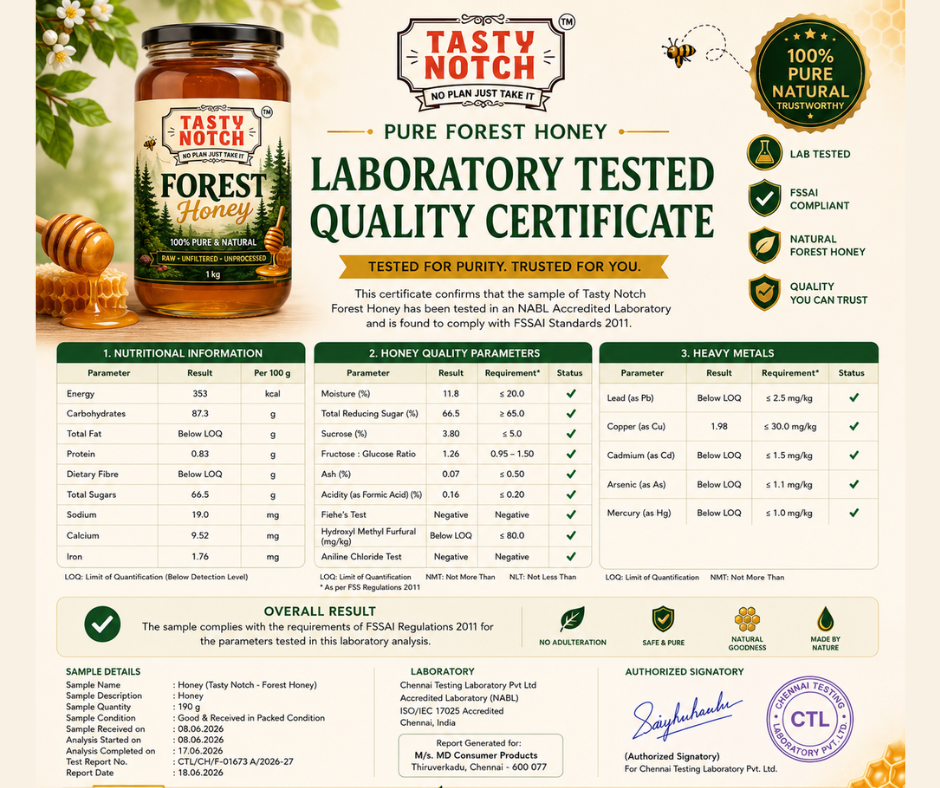
However, taste and smell alone cannot scientifically prove purity. They are useful sensory characteristics, but laboratory analysis is much more reliable for detecting certain forms of adulteration.
6. Consider the Source of the Honey
Knowing where your honey comes from can help you make a more informed purchasing decision.
Responsible honey brands should be able to provide clear information about their product and sourcing practices.
Look for brands that are transparent about:
Honey variety
Source or region, where applicable
Packaging details
Food safety compliance
Batch information
Customer support
A transparent brand gives consumers more confidence in the product they are purchasing.
7. Be Careful With Popular Honey Purity Tests
You may have seen videos recommending tests such as:
Water Test: Put honey in water and see whether it dissolves.
Flame Test: Dip a matchstick in honey and try to light it.
Thumb Test: Place a drop of honey on your thumb and observe whether it spreads.
These tests are popular on social media, but they are not dependable scientific methods for confirming honey purity.
Honey naturally contains water and other compounds, and its behaviour can change depending on temperature, moisture content, and other factors.
If you need to establish authenticity or detect adulteration, appropriate laboratory testing is far more meaningful than household experiments.
8. Choose a Reliable and Transparent Brand
Perhaps the most practical step is to purchase honey from a brand that provides clear product information and follows applicable food-safety requirements.
Before buying, check the packaging carefully and make sure the product information is easy to understand.
You can also consider:
The brand’s reputation
Product traceability
Proper packaging
Batch information
Food license details
Customer reviews
Clear contact information
Don’t choose honey based only on price. A transparent purchasing experience is just as important as the product itself.
Final Thoughts
Choosing good honey starts with knowing what to look for.
Instead of relying on viral home experiments, pay attention to clear labeling, ingredients, sourcing information, food-safety details, traceability, and trustworthy sellers.
When you understand these basics, you can make a more informed choice and enjoy honey with greater confidence.
Looking for naturally sourced honey? Explore Tasty Notch Forest Honey and discover a delicious addition to your everyday food choices.